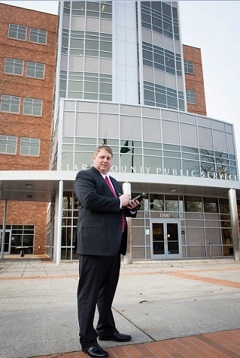
All Assessor's Office services are available online through this website; a secure processing drop box is located on the first floor of the Public Service Center.


Quick Links


Welcome to the Assessor's Office

Each year, the Assessor's Office identifies and determines the value of all taxable real and personal property in the county. These values are used to calculate and set levy rates for the various taxing districts (cities, schools, etc.) in the county and to equitably assign tax responsibilities among taxpayers.

We hope you find the information here helpful as you learn more about the Assessor, our office and the work we do in Clark County.


Seniors and Persons with Disabilities Property Tax Exemption

Income levels have increased for the Seniors and Persons with Disabilities Property Tax Exemption Program.  Please visit the Tax Relief Programs web page for more information on qualifications and to print an application.


tag

Narrator: Homeownership costs can quickly add up when you consider mortgage, property taxes, and insurance. But there are programs designed to help.
Narrator: For example, if you are a senior citizen or a person with disabilities and your primary residence is within Washington State, you may qualify for a reduction in property taxes and/or special assessments.

[On screen: Teal and white banner with Clark County, WA logo, speaker name, and speaker title]
Speaker [Stacy Martin, Joint Lobby Specialist, Clark County Assessor’s Office]: So the Senior and Disabled Tax Exemption Program is a Washington State program. It’s administered by each county Assessor’s office within Washington State. And the purpose of the program is to lower property taxes for seniors that are over the age of 61, and for disabled people, uh, as well as veterans that are disabled, uh, with at least an 80% or more disability rating.
Narrator: To be eligible, you must meet the following requirements.

[On screen: MUST BE 61 OR OLDER BY DECEMBER 31 OF THE ASSESSMENT YEAR, THE YEAR BEFORE THE TAXES ARE DUE, OR DISABLED.]

Narrator: First, you must be 61 by December 31st of the assessment year, unable to work because of a disability, or a veteran entitled to and receiving compensation from the VA at an 80% disability rating.

[On screen: OR a veteran entitled to and receiving compensation from the VA at an 80% disability rating]

Narrator: You must also own your home and reside in the home as your primary residence. There are also income requirements.

[On screen: You must own and occupy the property as your primary residence]
Narrator: Applications are available on the county’s website. 

Speaker [Peter Van Nortwick, Clark County Assessor]: So one of the reasons we, when we instituted this portal, was a lot of times children of elderly people are actually the ones that need to do the paperwork, maybe file their taxes. And your children, they can live in Arizona and go online and do-put the information in and help get you on the Senior Exemption Program.
Speaker [Peter Van Nortwick, Clark County Assessor]: So if you just go to our website and click on the Senior Exemption Program, you’ll get the information, you’ll get a link to the documentation you need, and be able to apply 100% online without even necessarily even coming into our office.
Narrator: On February 16th, staff from the Assessor’s Office were on location in Battle Ground, helping residents determine if they were qualified for the Tax Exemption Program. Similar events will be scheduled later this year.
Speaker [Peter Van Nortwick, Clark County Assessor]: What we’re doing today in Battle Ground is we’re doing outreach, and we’re going to do some in the communities, let’s say in Washougal and out in La Center, to make sure that we get out and help people, um, closer to where their location. Because for a lot of people, driving down to Vancouver, um, is difficult. We also can, you can apply online.

[On screen: Teal and white banner with Clark County, WA logo, speaker name, and speaker title]
Speaker [Linda Fenstermaker, Clark County Resident]: As far as this program, I think it’s awesome. I think you coming out to the community was a great step, and um. It’s not as intimidating for people to come in, and one-on-one questions, and, um, and the people that were here were very helpful and friendly. So, I think the, the program itself is uh-a really good thing for this county.
Narrator: The Property Tax Exemption Program website has an eligibility worksheet to help residents find out if they qualify. If approved, there are several benefits to homeowners.

[On screen: Teal and white banner with Clark County, WA logo, speaker name, and speaker title]
Speaker [Stacy Martin, Joint Lobby Specialist, Clark County Assessor’s Office]: The benefit of the program is it’s going to lower your property taxes. And the nice thing is the difference in taxes does not have to be repaid, and it does not put a lien on their home; it also will freeze their tax assessed value. So as long as they’re on the program, they won’t pay on any higher value. And it’s also because it’s income driven as well. The lower the income, the more taxes we can remove.
Narrator: For more information about the Property Tax Exemption Program and to determine your eligibility, call the Clark County Assessor’s Office at 564.397.2391 or visit clark.wa.gov/assessor.

[On screen: Green and blue background. Text - FOR MORE information {Clark County Logo} Clark County Assessor’s Office clark.wa.gov/assessor 564.397.2391

ASO - Peter Van Nortwick

      Peter Van Nortwick, Assessor

The 1% Property Tax Limits

Frequently, our citizens ask, "I thought my property taxes could only increase 1%?" The 1% limit is often discussed in the media but not often explained. The 1% increase limit applies to the amount of property tax collected by tax districts. The 1% increase limit does not apply to individual property tax payers.

If a tax district was able to collect $100 in property taxes last year, the amount they may collect this year will increase to $101 plus an allowance for new construction. Typically, increases in your overall tax bill are driven by two factors:

1) voter-approved levies which are not subject to the 1% increase limit, and

2) an increase in your assessed value if the increase is larger than the typical increase in value.

Your property tax increase cannot be appealed. You may, however, appeal the assessed value established on your property within 60 days of the date on your Notice of Value if you believe the assessed value is greater than the market value of your property.


Property Valuations in Clark County

To help you understand what we do in the Assessor's Office and how that impacts your property valuation, we created a short video that follows some of our appraisers as they perform their jobs.

tag

Narrator: There are about 50 public service providers that depend on property taxes in Clark County. Depending on where you live, you might be in a school district, fire district, a city, even a cemetery district.
Narrator: The Clark County Assessor’s Office appraises properties to establish their fair market values, which determine how property taxes are calculated. Following rules and procedures set by Washington State, the Assessor’s Office updates all property valuations and goes out to the field to physically inspect one-sixth of the properties in the county each year.
[On screen: Purple banner with multicolored Clark County, WA logo, speaker name, and speaker title]
Speaker [Peter Van Nortwick, Clark County Assessor]: Well, the reason to have an assessor and to appraise the property is that property taxes are one of the main ways that the counties and the school districts bring in revenues. And so, our system is based upon a budget-based system. The taxing district, such as the school district, has a set budget, uh, which we are going to collect, and we go out and appraise the properties in order to determine who is going to pay what percentage of that budget.

Narrator: To keep a fair and equitable system, appraisers in the Assessor’s Office are looking at a host of variables that go into evaluating property, such as acreage, style, quality of materials, and square footage of buildings. 

 [On screen: Purple banner with multicolored Clark County, WA logo, speaker name, and speaker title]

Speaker [Linda McClain, Appraiser, Clark County Assessor’s Office]: We have characteristics that are, uh, printed out from our database on each property in our geographic area we’re assigned, whether it’s a bare lot parcel, where it may just have an outbuilding, or those with mobile homes, houses...
Speaker [Linda McClain, Appraiser, Clark County Assessor’s Office]: …We will go to the property, and depending on the speed of the road, we drive by as slow as possible. We pull up in front of a home, and we check the exterior, uh, siding. We look at the roof type. If there’s anything that looks incorrect, we will pull in and try and measure around the exterior of the home and talk to the homeowners.
Narrator: Another variable for evaluating property is the sale of homes in the area. In the state of Washington, an appraisal date of January 1, 2012, was computed using sales from 2011. Because of this system, assessments reflecting values in 2011 will affect property taxes in 2013.

[Soft background chatter]
Speaker [Peter Van Nortwick, Clark County Assessor]: One of the things that I hear from people is they ask me the question, “How come my property taxes went up by, you know, X amount of dollars when the state limits the increase in property taxes to 1%?” And what that is actually referring to is each of the taxing districts, from year to year, is allowed to increase their budget by 1%, plus new construction.
Speaker [Peter Van Nortwick, Clark County Assessor]: One of the key things that we do in our office is we go out when people do permits, we pick up those permits and make sure we bring in that new construction and add it to the rolls, because that’s very important to the cities. Because that is one of the big drivers of how they can bring more money in is by having new development.
Speaker [Patrick Higbie, Appraiser, Clark County Assessor’s Office]: Well, we’re out here picking up some new construction. This is the, uh, new permit that was issued earlier this year by the City of Vancouver. Um, we’re out here just basically measuring out, uh, the house, making sure the plans match up, uh, and we’re, and we’re fairly, uh, assessing the property based on its square footage.

Speaker [Patrick Higbie, Appraiser, Clark County Assessor’s Office]: Oftentimes, the plans that are submitted by the builder are not exact based on the you know lot dimensions, or just because there are so many permits in some of these subdivisions, they might be crisscrossed. For the future owner of the property, we want to make sure that they’re, you know, not overtaxed, or for that matter, I guess, under-taxed.

Narrator: A helpful tool to find information about individual properties, such as assessment data and building characteristics, is at the Clark County Property Information Center on the county’s website. 

Speaker [Peter Van Nortwick, Clark County Assessor]: You can also go on and find the taxes that you paid, and you can also find out the breakdown of your taxes, what school districts they go to, how much, what other taxing districts, what percentage is going to them… 

Speaker [Peter Van Nortwick, Clark County Assessor]: …If your property taxes go up, you can also look and say, “Where are my property taxes going up?” Is it based upon more going to the school district or more going to the city that you live in?

For more information on the Clark County Assessor’s Office and to check out the Property Information Center tool, go to the county’s website at clark.wa.gov/assessor.