Walk, Run, Ride or Roll

It’s a proven fact: physical activity improves health and reduces stress. Whether you walk, run, ride or roll, consistent activity reduces the risk of diabetes, heart disease, hypertension, osteoporosis, depression and other chronic health conditions.

Plan
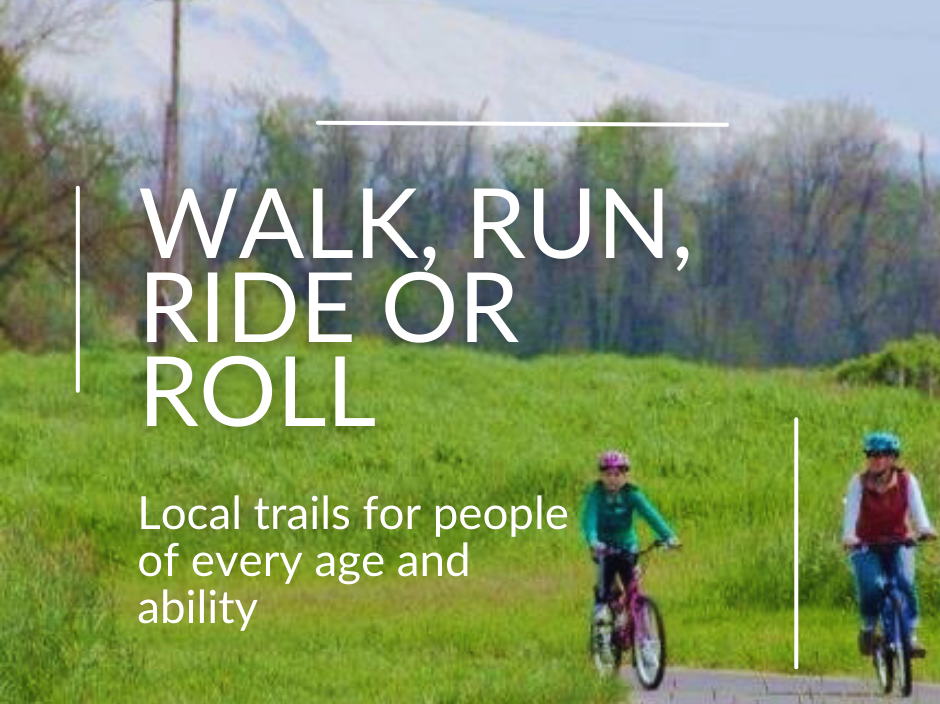
If you haven’t been physically active recently and have access to a medical provider, ask if there are any limits on your activity plans. This is important if you have medical conditions such as heart disease, hypertension, diabetes or problems with your bones or muscles.

  • Pick a trail that matches your ability and accessibility needs.
  • Let someone know where you are going and when you expect to return.
  • Bringing a furry companion? Be sure they are welcome on your chosen trail.

Southwest Washington offers numerous trails and recreational opportunities for people of every age and ability. See below for a complete list of local parks and rails.

Prepare
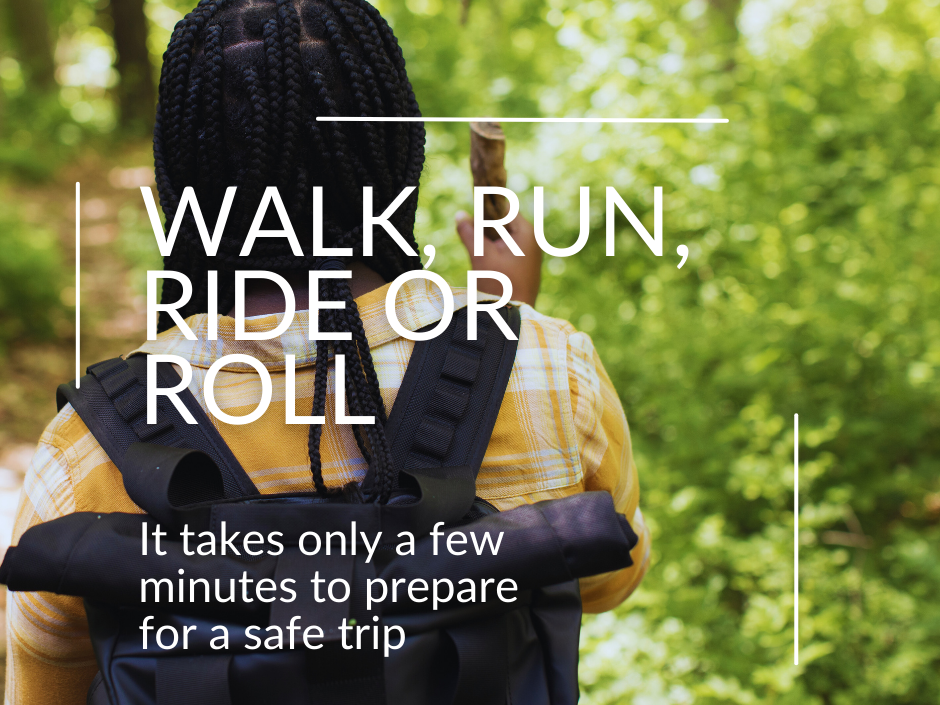
Before heading out on an adventure – gather what you need for a safe trip.

  • Choose comfortable, close-toed walking shoes and socks.
  • Check the weather and dress appropriately. Layers that can be removed or added along the way are a good idea.
  • If it is sunny, pack a hat, sunscreen and sunglasses.
  • If it is rainy, wear or pack a slicker, rain hat or umbrella.
  • Got allergies? Don’t forget antihistamines or an epi-pen.
  • Always carry water, a light snack, a few basic first aid supplies and your cell phone.
  • Going on a long hike out of cellphone range? Bring a map, a compass and carry a whistle and flashlight.
  • Optional accessories: insect repellent, walking sticks, and a pedometer.
  • Dogs need supplies too! Pack water, leash and disposable bags for clean-up.

Go!
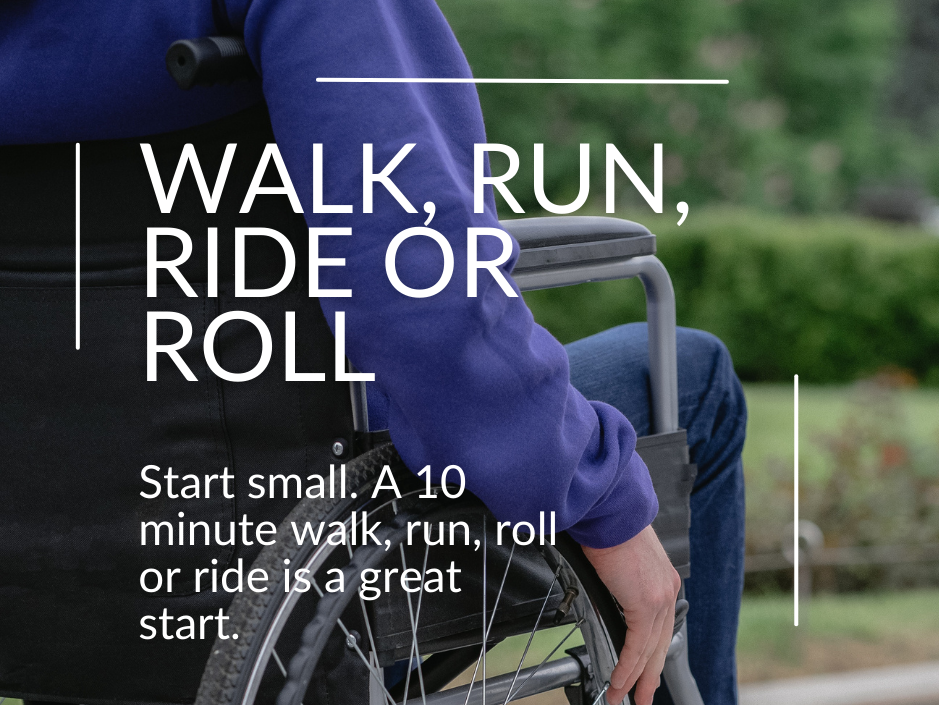
Not everyone has the same access to leisure time. Adding physical activity into your day when you can has positive impacts on your health.

  • If breathing is difficult, or you can’t talk while moving, slow down or take a break.
  • Set goals and monitor your progress. Reward yourself for meeting goals. A great goal is 30 minutes of physical activity a day.
  • Make it social! Enjoying activity with a buddy often keeps people active longer.

Explore a new trail

Looking for inspiration? The following videos feature local trails. Some offer water views, others connect visitors to local history. All offer great opportunities to get moving in nature.

Burnt Bridge Creek Greenway  
Multiple access points from 92nd Avenue to Steward Glen Park at Fruit Valley Road and Bernie Road  map

tag

[Background music plays] 

Narrator: 

Looking for nature in the middle of the city? The 8-mile Burnt Bridge Creek Trail runs east and west through Vancouver, Washington, linking businesses, neighborhoods and parks. Whether you prefer to walk, run, ride, or roll, this trail is a favorite for both commuters and recreation enthusiasts.  

[On Screen: Bicyclists and walkers using the trail]  

The hard-surface, shared-use trail can be accessed year-round at multiple points from Fruit Valley all the way to Northeast 90th Avenue and Burton Road. The trail begins in Stewart Glen Park in West Vancouver and passes through Leverich, Arnold, Bagley and Meadow Home parks. Most of the trail is flat, with the exception of the segment that approaches the I-5 crossing.  

[On Screen: Paved trail surrounded by trees and shrubs, followed by a map showing the entire trail.] 

From Meadow Home Park through the soccer fields and across Fourth Plain Boulevard, the trail follows the Bonneville Power lines. In other areas, the trail is only surrounded by nature.  

[On Screen: Different portions of the trail under the Bonneville Power lines, followed by the trail surrounded by trees.] 

As its name implies, Burnt Bridge Creek trail follows the 13-mile creek that grows into a robust stream each winter as it winds from Orchards to Vancouver Lake and Lake River. Some areas of the trail are open pasture and meadow. In other areas, diverse species of shade trees form a canopy, and wildflowers grow along the trail.  

[On Screen: Burnt Bridge Creek flowing through shrubs and trees.] 

Dogs are welcome on the trail but must be kept on leash. Remember, clean up after your pet. Bag dispensers and waste cans are available for pet cleanup. Public restrooms for humans are located at Devine Road.  

[On Screen: People walking dogs along the trail.] 

For health and safety, it is always a good idea to prepare for a walk or hike. Be sure to wear comfortable shoes. Dress appropriately for the weather. Carry water and a snack. Let someone know where you're going and when you expect to return. Carry ID and a cell phone. Be aware and enjoy your surroundings and walk with a buddy. Most of all relax, enjoy the time you spend in nature and all the benefits of physical activity. Whether you only have time for a quick walk or in the mood for a longer bike ride, Burnt Bridge Creek Trail has something for everyone. 

[On Screen: List of health and safety reminders, followed by people walking and biking on the trail.] 

[Background music plays] 

[On Screen: Burnt Bridge Creek Trail, NW Lakeshore Ave. & NW Bernie Drive, Vancouver, WA. Wheelchair accessible. Pets allowed on leash. www.cityofvancuver.us/parksrec/] 

[On Screen: This video made possible by a federal grant shared by: The Healthy Living collaborative of Southwest Washington. Photography, writing and production by: Cyndie Meyer, Clark County Public Health, Healthy Communities Program.] 

[On Screen: Music - “Today’s Special: Jam Tomorrow” by Doctor Turtle. Creative Commons/freemusicarchive.org] 

Columbia Tech Center Park
17701 SE Mill Plain Boulevard, Vancouver  map
 

tag

[Background music plays] 

Narrator:  

Columbia Tech Center’s Central Park in East Vancouver is one of Clark County's newest urban parks. Wide sidewalks from surrounding neighborhoods and nearby businesses lead to the 12-acre park that is the cornerstone of this 420-acre master-planned community. Among the park’s many features are lighted, paved and nature-scaped trails, a nature inspired play structure for children, multiple water features, basketball courts, a wetlands trail, and an outdoor amphitheater for community events.  

[On Screen: Views of different areas of the park including a play structure, shrubbery, amphitheater and water feature.] 

In summer, Columbia Tech Center partners with the city of Vancouver, to host the Sunday summer concert series and movies in the park. The Vancouver Farmers Market also holds seasonal weekday farmers markets here. Information on these and other events are available on the park's Facebook page, on the city of Vancouver website, and on the website for the Vancouver Farmers Market.  

[On Screen: The amphitheater at the park with people walking through it and a water feature on the side, followed by images of the city of Vancouver website and the Vancouver Farmers Market website.] 

Traveling west through the park, paved trails give way to an attractive raised boardwalk that elevates pedestrians and bicyclists above protected wetlands. Interpretive signage and benches for viewing the wetlands and wildlife encourages visitors to consider their personal responsibilities in protecting the environment.  

[On Screen: Bicyclists riding on the paved trails through the wetlands.] 

Play areas for both adults and children are a focal point of the park. Basketball courts encourage pickup games, and a 25,000-square-foot nature playground is an inviting and exciting play area for children. The structure’s play mound, tower, and rope bridge, encourage imaginative play. A water and sand area, and several permanent outdoor musical instruments, engage children's developing senses.  

[On Screen: The play area at the park with children playing on the play structure.] 

A new soft-surface trail leads out of the nature playground and runs parallel to Mill Plain Boulevard along the planted hillside, adjacent to the future development sites. Future plans for the park include connections to Fisher Basin Park and adjoining neighborhoods. When leaving the park, be sure to take a moment and enjoy the beautiful water features. These sites are a favorite year-round backdrop for family and prom photos but are perhaps best enjoyed as a home for the neighborhood's ducklings.  

[On Screen: The trail winding through trees, wetlands and nature followed by water features surrounded by trees, shrubs and flowers.] 

For health and safety, it is always a good idea to prepare for a walk or hike. Be sure to wear comfortable shoes. Dress appropriately for the weather. Carry water and a snack. Let someone know where you're going and when you expect to return. Carry ID and a cell phone. Be aware and enjoy your surroundings, and walk with a buddy. Most of all, relax, enjoy the time you spend in nature and all the benefits of physical activity. Next time you are shopping, dining or doing business in the Tech Center area, save some time for a walk, ride or roll through the beautiful trails of Central Park. 

[On Screen: List of health and safety reminders.]  

[Background music plays] 

[On Screen: Columbia Tech Center Central Park, 17701 SE Mill Plain, Vancouver, WA. Open dawn to dusk. Wheelchair accessible. Pets allowed on leash. www.columbiatechcenter.com] 

[On Screen: This video made possible by a federal grant shared by: The Healthy Living collaborative of Southwest Washington. Photography, writing and production by: Cyndie Meyer, Clark County Public Health, Healthy Communities Program.] 

[On Screen: Music - “Today’s Special: Jam Tomorrow” by Doctor Turtle. Creative Commons/freemusicarchive.org] 

Captain William Clark Park and Cottonwood Beach 
SR 500 at 15th Street, Washougal  map

tag

[Background music plays] 

Narrator:  

On the shore of the Columbia River in Washougal, Washington, sits one of Clark County's gems, Captain William Clark Park and Cottonwood Beach. This 96-acre park offers nearly 5 miles of level dirt and gravel trails that follow the shoreline and the dike. Picnic, barbecue, and restroom facilities, historic and interpretive signage, and easy water access, make this a terrific destination. 

[On Screen: The sign for Captain William Clark Park at Cottonwood Beach followed by the trails of the park.] 

Suzi Wedlake: 

Hi, I'm Suzi Wedlake, and I'm the caretaker here at the park. This is a beautiful park, and it is used very heavily. People love to come out here and walk and jog and ride their bikes, and walk their dogs, and it's just a gorgeous park for that. People come out in the morning, bright and early, before work at 5 am and jog and use the park. And again at night, before they go to bed, but they'll come out after work and use the park as well. There's reserved picnic areas down in the park as well. There's two shelters, and you can reserve those on the Clark County website.  

[On Screen: Suzi Wedlake sitting on a log on the shore of the Columbia River. Followed by people using the trails in the park.] 

Narrator: 

In 1806, explorers Meriwether Lewis and William Clark established a camp at Cottonwood Beach while they stocked up for the return trip through the Columbia River Gorge. They camped at Cottonwood for six days, the longest period of time the Corps of Discovery camped at any site in Clark County.  

[On Screen: The bank of the Columbia River.] 

Suzi Wedlake: 

We have canoes down here at the beach, and there's also canoes up at the top by the pagoda, and they are exact replicas that were made from the Lewis and Clark expedition, and it is said that they actually stayed and camped here when they came through. 

[On Screen: Replicas of historical canoes sitting on the shore of the Columbia River followed by two people in canoes launching into the Columbia River.] 

Narrator: 

Cottonwood Beach is named for the beautiful, fast-growing cottonwood trees that cover this area. Not only do these members of the poplar family provide shade, but their trunks were once used by Native Americans for dugout canoes, and their bark was used for tea. In summer, he trees’ red blossoms give way to cottony seeds that drift like snow across the paths at Captain William Clark Park.  

[On Screen: Groves of Cottonwood trees and cottony seeds in drifts along the path.] 

Narrator: 

For health and safety, it is always a good idea to prepare for a walk or hike. Be sure to wear comfortable shoes. Dress appropriately for the weather. Carry water and a snack. Let someone know where you're going and when you expect to return. Carry ID and a cell phone. Be aware and enjoy your surroundings and walk with a buddy. Most of all relax, enjoy the time you spend in nature and all the benefits of physical activity. 

[On Screen: List of health and safety reminders, followed by a person walking two dogs on leashes along the Columbia River.] 

[Background music plays] 

[On Screen: Captain William Clark Park and Cottonwood Beach. South Index and Street at South 32nd Street, Port of Camas-Washougal. Hours: 9am – dusk. Wheelchair accessible. Pets allowed on leash. Picnic shelters may be reserved online. www.clark.wa.gov/public-works ] 

[On Screen: This video made possible by a federal grant shared by: The Healthy Living collaborative of Southwest Washington. Photography, writing and production by: Cyndie Meyer, Clark County Public Health, Healthy Communities Program.] 

[On Screen: Music - “Today’s Special: Jam Tomorrow” by Doctor Turtle. Creative Commons/freemusicarchive.org] 

Lacamas Park Trails
NW Lake Road and NE Everett Street, Camas  map

tag

[Background music plays] 

Narrator: 

Looking for the perfect blend of water, trails, tall trees and easy access? Lacamas Park and the trails of Round Lake will meet all your needs. It is a local favorite with walkers, hikers, bikers, and kayakers, and many people visit the park to simply enjoy the views. The entrance to Lacamas Park, and parking for about 20 cars is two and a half miles north of downtown Camas on Everett Street. There is additional parking across the road at Lacamas Lake.  

[On Screen: People enjoying various areas of the park, followed by a map of the location of the park.] 

Lacamas Park offers a quarter mile of wide, paved, scenic trails near the park entrance that are easily accessed by people using walkers or wheelchairs. There are 4 more miles of dirt and gravel trails that lead to waterfalls, the Camas Lily fields and that connect to other trail systems. Most trails are easy and appropriate for reasonably fit people of all ages. A few segments require a slight climb.  

[On Screen: Walkers and joggers starting out on the trails from the parking lot followed by a map of the trails in the park.] 

The park’s main trails are well marked but smaller paths don't necessarily show up on all maps and may lack trail markers. An information kiosk at the trailhead, and maps available online, provide a guide to the park’s main hiking loops. It's a good idea to snap a quick photo of the map before you head out. As you hike through the park, you may want to stop at interpretive trail markers to read about local history and ecology of the area. The signs are informative and help park visitors understand their role in supporting a healthy environment.  

[On Screen: Different signs along the trails and the information kiosk at the entrance followed by an interpretative trail marker sign.] 

Round Lake was formed years ago, when Lacamas Creek was dammed to provide a water source for the Camas Paper Mill. Visitors can see the screening structure that keeps fish and debris out of the mill’s water supply before it heads over the falls. A walk over the dam provides beautiful views of Lacamas Falls. Another trail near the dam leads to an even better view of the 15-foot water drop. The geological structures formed by the falling water are known as the potholes. The creek eventually empties into the Washougal River.  

[On Screen: A person fishing on the shore of Round Lake followed by the falls at the dam.] 

Round Lake is popular with hikers, fishermen and boaters. Although power boats are allowed on Lacamas Lake, which is across Everett Street, there is no access for power boats on Round Lake. Because of this, Round Lake is almost always serene and is the perfect place for paddling of any kind. For safety, be sure all boaters and paddlers wear a life vest.  

[On Screen: Boaters and paddleboarders on Round Lake.} 

In spring, this area's famous for beautiful Camas Lily blossoms, which cover nearby fields in shades of purple and lavender. Markers point the way to the Camas Lily trail where the flowers blossom from mid-April through mid-May. If you miss the lilies, don't worry. The entire park is a wonderland of trees and vegetation all year long. Sword ferns, vine maples, hemlock, fir and cedar trees, keep the trail shady, sweet smelling and protected.  

[On Screen: Bikers and walkers on a tree shaded trail followed by images of the trees and ferns in the park.] 

The Lacamas Park picnic area at the southern end of Round Lake offers scenic picnic spots, restroom facilities and an outdoor covered area and kitchen. An enjoyable playground for children joins the picnic structure.  

[On Screen: The picnic area and playground at the park.] 

For health and safety, it is always a good idea to prepare for a walk or hike. Be sure to wear comfortable shoes. Dress appropriately for the weather. Carry water and a snack. Let someone know where you're going and when you expect to return. Carry ID and a cell phone. Be aware and enjoy your surroundings and walk with a buddy. Most of all, relax. Enjoy the time you spend in nature and all the benefits of physical activity. The trails of Lacamas Park are well worth a visit any time of year. What a great place to walk, run, ride or roll. 

[On Screen: List of health and safety reminders, followed by people walking and biking on trails in the park.] 

[Background music plays] 

[On Screen: Lacamas Park 344 NE Everett St, Camas, WA 98607. Hours: 7 a.m. to dusk. Wheelchair accessible: Yes. Pets: Allowed on leash. www.clark.wa.goc/public-works/] 

[On Screen: This video made possible by a federal grant shared by: The Healthy Living collaborative of Southwest Washington. Photography, writing and production by: Cyndie Meyer, Clark County Public Health, Healthy Communities Program.] 

[On Screen: Music - “Today’s Special: Jam Tomorrow” by Doctor Turtle. Creative Commons/freemusicarchive.org] 

Fort Vancouver National Historic Site
Evergreen Boulevard and Fort Vancouver Way, Vancouver. Visit Fort Vancouver's website for a list of their various walks and outdoor activities.

tag

[Background music plays] 

Narrator: 

Fort Vancouver National Site offers an inviting loop where visitors walk, run, ride, or roll past sites of historical significance, architectural beauty, and recreational interest. Located directly east of Interstate 5 and just north of Highway 14 and the Columbia River, the site provides a quick and lovely getaway from the hustle and bustle of nearby downtown Vancouver. From the beautifully shaded sidewalks of Officer’s Row to the open trails on the old spruce mill site, a visit to this area is a journey through time. There are many access points to the site including the site's historic starting point Fort Vancouver itself.  

[On Screen: People walking along Officer’s Row followed by a map of the Fort Vancouver Historic site.] 

Fort Vancouver dates back to the 1820s, when Britain's Hudson's Bay Company established its trading headquarters here for the Oregon Territory. It was also the largest supply depot west of the Rocky Mountains and the official endpoint of the Oregon Trail. The fort's fascinating history has been reconstructed in meticulous detail. Today, the National Park Service operates the fort and welcomes visitors to stroll through a realistic blacksmith shop, fur trading establishment, medical office, historical kitchen, officer's quarters and counting house. The fort was declared a national historic monument in 1948 and was redesignated a National Historic Site in 1961. On the way to or from the fort, visitors may wander through a historic demonstration garden. The garden’s design, horticultural techniques and plants, such as tobacco, quince and heirloom vegetables, make history literally come to life. 

[On Screen: The entrance and gardens to Fort Vancouver followed by historical images of life inside the fort in the 1820’s.] 

[Music plays while images from the garden in front of Fort Vancouver are shown on screen.] 

[Background music, primarily drums and bugles, plays] 

A short walk north of the fort is Vancouver Barracks, which served as the first US Army base located in the Pacific Northwest. The barracks was established in 1849, soon after the Treaty of Oregon established the 49th parallel as the official boundary between land owned by Great Britain and the United States. Within months, a contingent of soldiers with 700 horses, 1200 mules, and 120 supply wagons, were sent to the site. Over the years the barracks provided housing for troops, a military hospital and support services that continued through World War II. Today, these buildings no longer serve a military purpose. Instead, they house residences, event venues and local businesses. It's impossible to miss the 38-acre lawn known as the parade grounds. Wide, paved sidewalks surround this park that was originally established for Army drills, ceremonies and recreation. Paved trails cross back and forth over the parade grounds leading visitors to picnic tables, the flagstaff and historic bandstand. The bandstand was originally built in the 1870s to serve as the center of Vancouver Barracks’ social life and activities. The bandstand that visitors see today is a reconstruction of the original structure and was built in the 1980s.  

[On Screen: Vancouver Barracks as it looks now and photos of the barracks and parade grounds from the past.] 

The tree shaded sidewalks of Officer’s Row meander past historic homes that house a restaurant, a museum, homes and offices. Many of the large trees along the row were planted when the street was first developed back in 1879. One hundred and ten years later, the citizens of Vancouver commemorated the first planting with the second planting of big leaf maple trees. Pause along your way to check out the Arbor Day markers planted between the trees to memorialize local and national leaders. Ready for a break? The Eatery at the Grant House serves meals and snacks, and the veranda is a lovely place for a cool beverage on a warm day. The Grant House was built by the US Army in 1849 to house army officers. Under the clapboard that you see today is the original log structure named for Civil War General Ulysses S. Grant. Although General Grant never actually lived in the house, he served for a time as commanding officer of Camp Vancouver. A short walk further down Officers Row, is the Marshall House occupied by General George C. Marshall in the 1930s. While he lived here, the Russian pilot Valery Chkalov landed at nearby Pearson Airfield after making the first nonstop flight over the North Pole, from Moscow to the United States. Today, the house holds a museum, a business space, and a venue for special events. The home is operated by the historic trust and is open for tours Tuesdays through Saturdays from 9 am to 6 pm. 

[On Screen: The tree lined streets of Officers Row, Arbor Day markers. and interior of the Marshall House.] 

At the southeast end of the parade ground is Pearson Air Museum and Airfield. The museum is open 9:00 to 5:00, Tuesdays through Saturdays and is an interesting place to stroll. Here, visitors view an impressive collection of historic airplanes and educational installations that chronicle the site’s history. Beyond the museum is Pearson Airfield, one of America's oldest continuously operating airfields. The large open field to the west of the air museum was originally used for agriculture to feed residents of the fort. Later, it served as a polo field for soldiers housed at Vancouver barracks. In 1917, the US Army abruptly transformed the area into the spruce production division. Here, locally harvested spruce trees were processed into the lightweight wood products needed to build US and Allied aircraft during World War I. Almost overnight, the area was covered with hundreds of cone-shaped tents, a railroad yard, giant burners, sawmills, drying kilns, and more. Over the single year the Spruce Mill operated, it produced more than 143 million board feet of spruce products.  

[On Screen: Pearson Air Museum and airfield followed by photos of the spruce mill production in 1917.] 

Interpretive signs along the trails help visitors picture what is hard to imagine. When the war ended so did the mill and the area was immediately returned to its current state. Today, well-maintain trails crisscross the field and visitors walk, ride, or roll across the site of great significance during World War One. Trails that cross the spruce mill site lead back to the fort. The loop around the historic site encompasses approximately 1mile but can be linked with other trails through downtown Vancouver or over the landbridge to the Waterfront Renaissance Trail for a longer expedition. Maps and guides can be found on the city of Vancouver's website.  

[On Screen: Interpretative signs along the trails followed by a map of the trails at the historic site.] 

For health and safety, it is always a good idea to prepare for a walk or hike. Be sure to wear comfortable shoes. Dress appropriately for the weather. Carry water and a snack. Let someone know where you're going and when you expect to return. Carry ID and a cell phone. Be aware and enjoy your surroundings and walk with a buddy. Next time you're looking for a great place to walk, run, ride, or roll, try traveling down memory lane at Fort Vancouver National Historic site. 

[On Screen: List of health and safety reminders, followed by people walking.] 

[Background music plays] 

[On Screen: Fort Vancouver National Site 612 East Reserve Street, Vancouver, WA. (360) 816-6230. Summer hours: Tuesday – Saturday; 9am – 5pm. Winter hours: Tuesday – Saturday; 9am – 4pm. Wheelchair accessible. Pets allowed on leash. www.nps.gov/fova ] 

[On Screen: Pearson Air Museum 1115 E 5th Street, Vancouver, WA. (360) 816-6232 Open Tuesday – Saturday; 9am – 5pm. Wheelchair accessible. www.nps.gov/fova ] 

[On Screen: The Marshall House 1301 Officers Row, Vancouver, WA. (360) 693-3103 Tuesday – Friday; 9am – 5pm. www.historictrustproperties.org , www.nps.gov/fova ] 

[On Screen: The Eatery at the Grant House 1101 Officers Row, Vancouver, WA. (360) 906-1101 Tuesday – Friday: 11am – 9pm; Saturday: 10am – 9pm; Sunday: 10am - 3pm. https://eateryatthegranthouse.com ] 

[On Screen: This video made possible by a federal grant shared by: The Healthy Living collaborative of Southwest Washington. Photography, writing and production by: Cyndie Meyer, Clark County Public Health, Healthy Communities Program.] 

[On Screen: Music - “Today’s Special: Jam Tomorrow” by Doctor Turtle. “The Soldiers Farewell Fanfare” by The U.S. Army Old Guard Fife and Drum Corps; “Covered Wagon Days” by Ed Weems and His Orchestra. Creative Commons/freemusicarchive.org] 

Steigerwald Lake Wildlife Refuge
33501 SE Evergreen Highway, Washougal  map


tag

[Background music plays] 

Narrator: 

Steigerwald National Wildlife Refuge is a beautiful, wheelchair-accessible place to enjoy nature. A visit to the refuge’s hard-packed trails provide all the benefits of physical activity and opportunities to view birds and wildlife in their own habitat. The refuge is located in Washougal, Washington, just past the entrance to the Columbia Gorge National Scenic Area. Here, farmland has been dedicated as an open space refuge that includes more than 1,000 acres of wetlands, a stand of Oregon white oak, cottonwood trees and grassland habitats. Birds and wildlife take priority at Steigerwald, so pets, including pets on leash, are not allowed on the trail. Biking and running are also prohibited on trails through the refuge so that animals and birds are not frightened, but they are allowed on the dike trail leading to Steigerwald.  

[On Screen: Walking path meanders through the refuge followed by a map of the trails at the refuge.] 

Jared Strawderman: 

I'm Jared Strawderman. I'm the volunteer coordinator for the Columbia Gorge Refuge Stewards. The trail starts up here at highway 14, in the parking lot, and goes about a mile to Columbia Dike Trail, where it meets up with the Columbia River. The Columbia Dike Trail is three and a half miles from Steamboat Landing out to the eastern edge of the refuge here. It’s an easy walk, and there’s lots of wildlife to see.  

[On Screen: Jared Strawderman in front of the Steigerwald map.] 

Narrator: 

Interpretive trail signs remind walkers to listen for bird calls, to look for evidence of animals, and to appreciate and identify the creatures who live here. Birding enthusiasts have identified kingbirds, phoebes, nighthawks, Lewis's woodpecker, and burrowing owls on the refuge. 

[On Screen: Interpretative trail signs followed by a sitting area along one of the trails with a view of the wildlife refuge.] 

Laurie Kerr: 

And the thing that I think is so special about this refuge, is that it's public lands and the abundance of wildlife. I often see osprey and bald eagles, and there's a muskrat, all kinds of birds and ducks, and it's just wonderful. We'd love to have more people here. It's a great place to be. 

[On Screen: Laurie Kerr standing in front of the Steigerwald map followed by the wildlife sighting board.] 

Narrator: 

This is designated an art trail, so visitors can enjoy art installations depicting birds and wildlife along the way. An artistic doorway marks the entrance to a section of trail that is closed to human traffic from October through April so wintering birds can be left undisturbed.  

[On Screen: Different views of the art that can be found along the trails in the refuge.] 

For health and safety, it is always a good idea to prepare for a walk or hike. Be sure to wear comfortable shoes. Dress appropriately for the weather. Carry water and a snack. Let someone know where you're going and when you expect to return. Carry ID and a cell phone. Be aware and enjoy your surroundings and walk with a buddy. Most of all, relax. Enjoy the time you spend in nature and all the benefits of physical activity. 

[On Screen: List of health and safety reminders, followed by people walking on the trail.] 

[Background music plays] 

[On Screen: Steigerwald Lake National Wildlife Refuge 35501 Evergreen Highway, Washougal, WA (360) 835-8767. Winter hours: 9 am – dusk. Summer hours: 9am – 9pm. A portion of the trail is closed from Sept. 30 to April 30. Wheelchair accessible. Pets and bicycles not allowed. www.clark.wa.gov/public-works ] 

[On Screen: This video made possible by a federal grant shared by: The Healthy Living collaborative of Southwest Washington. Photography, writing and production by: Cyndie Meyer, Clark County Public Health, Healthy Communities Program.] 

[On Screen: Music - “Today’s Special: Jam Tomorrow” by Doctor Turtle. Creative Commons/freemusicarchive.org] 

Bicycle safety

Whether you bike for transportation, exercise, or recreation – bicyclists can face hazards and injuries when sharing the road.

Learn how to navigate around Clark County and keep safe by following bicycle and road safety tips!

Safety

Commuting and travel

For more information, contact the Lifecourse team.